Reference studies to try
 01
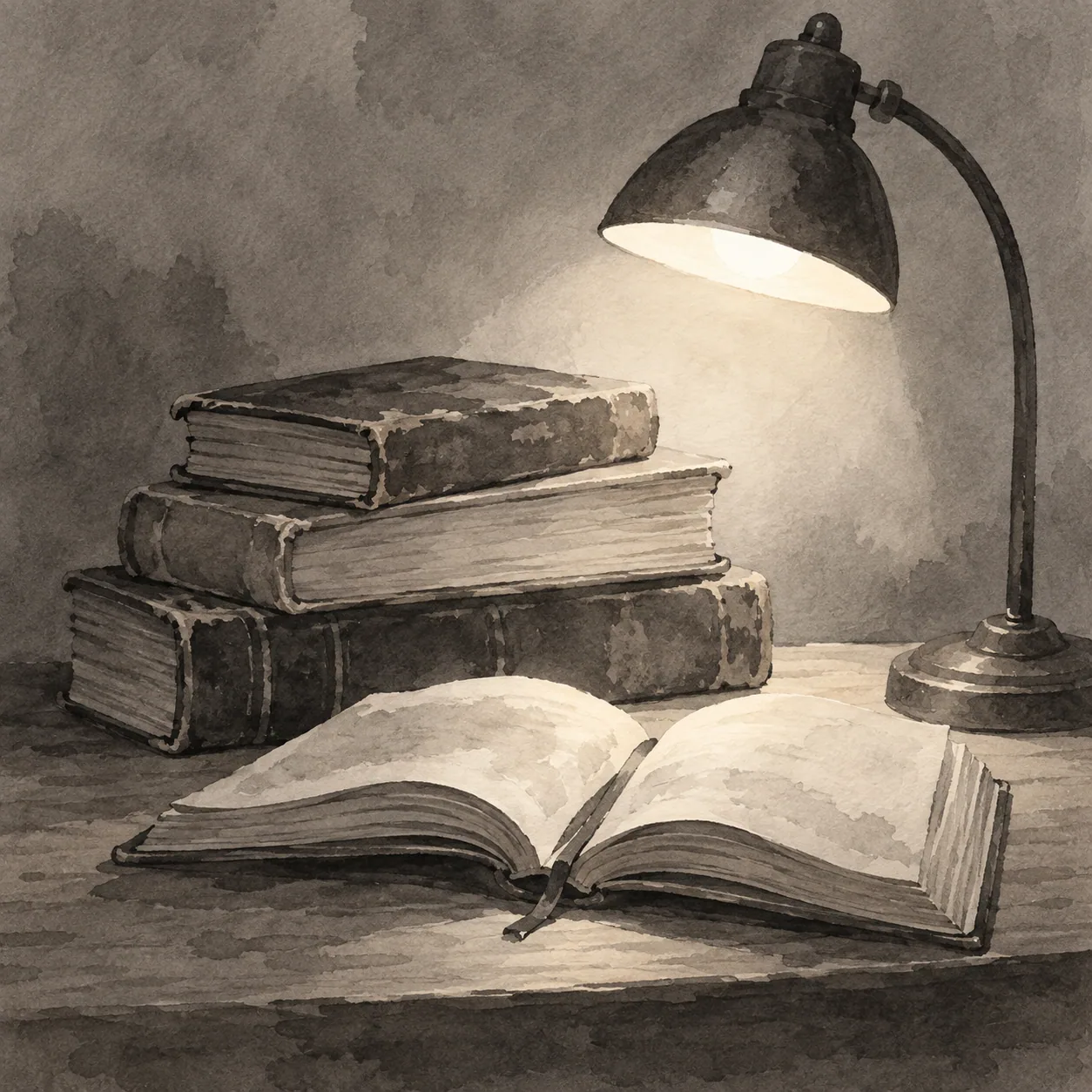
A stack of books under one lamp
Study the page edges, the single cast shadow, and the brightest plane. Reduce the still life to three value groups before adding texture.
 02
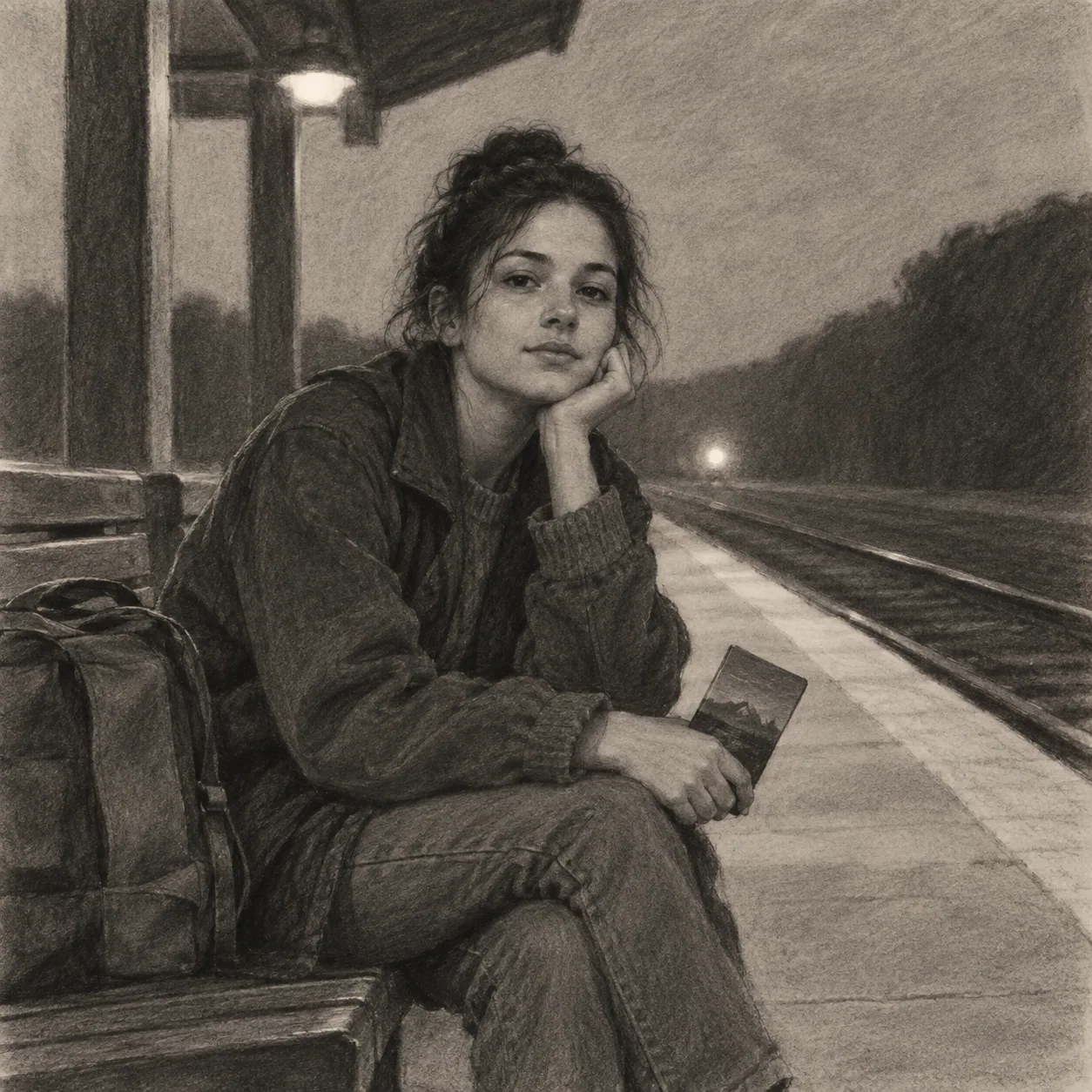
A portrait with a clear gesture
Choose a three-quarter portrait and mark the head tilt, shoulder angle, and hand placement first. Let the pose carry the study before you describe the face.
 03
A path with repeating branches
Use a forest reference to compare the foreground, middle distance, and horizon. Simplify the branches into directional rhythms that lead the eye.
 04
Flowers seen through glass
Observe overlapping petals, soft refraction, and the edge where the vase meets the table. Change the crop or arrangement when you redraw it.
Observe before you copy
A reference is a source of visual facts. The more deliberately you decide what to borrow, the more room you keep for your own voice.
Use a reference for one clear question
Instead of copying an entire photo, decide what you want to learn. You might study the angle of a wrist, the shape of a cast shadow, the rhythm of tree branches, or the way a fabric folds around a body.
Crop the reference so the question becomes obvious. Then make a quick study, put the image away, and redraw the subject from memory. Comparing the two versions shows you what you actually understood.
Look for relationships, not isolated details
Measure one shape against another. Notice how high the horizon sits, how wide the negative space is, or how the darkest value relates to the brightest. Relative relationships keep a drawing coherent.
Edges carry information too. A sharp edge can bring a form forward, while a lost edge can show turning light or atmosphere. Choosing where to be precise is part of interpreting the reference.
Build a reference library with intention
Save references by what they teach you rather than only by subject. Groups such as folded fabric, cloudy light, expressive hands, or quiet interiors become useful when you are looking for a specific problem to solve.
Pair the library with your own drawing suggestions. Borrow the light from one reference, the pose from another, and the story from your imagination. That combination turns research into a new image instead of a mechanical copy.
Transform references into original studies
Drawing references are most helpful when they answer a clear question and then step out of the way. Choose one reference for structure, another for light, or a third for texture, but do not copy every surface from all of them. Make a quick study of the main information, close the images, and rebuild the scene from memory. The gaps you notice show you what deserves another look.
Change at least one meaningful decision before calling the study your own. Move the horizon, alter the pose, replace the material, or combine the reference with a personal memory. Keep a note about the source and what you learned, especially when you share the result. Ethical use does not reduce creative freedom; it gives you a clearer path from observation to interpretation and makes your drawing references part of a thoughtful practice.
Use visual sources with care
A reference can teach you without becoming a substitute for seeing. Check where an image came from and understand any license or permission that applies before you publish a close copy. For practice, focus on the underlying lesson: the proportion between shapes, the direction of light, the rhythm of a gesture, or the way a material reflects. That keeps the study useful even when the original image is no longer open beside you.
Combine observations from several sources and add a decision that belongs to your own experience. Change the setting, crop, pose, palette, or story, and record what you changed. Thoughtful use of drawing references protects other artists while giving you more freedom to interpret. The goal is not to avoid influence; it is to make the path from looking to making clear and intentional. When you revisit the study later, write down which observation stayed useful and which detail you can now solve without the source.
Questions about drawing references
Use references to answer a specific visual question, then return to your own choices about composition, materials, and meaning.
What makes a drawing reference useful?
A useful reference makes the information you need easy to see: a clear pose, readable light, visible structure, or a surface worth studying. It does not need to be a perfect finished image.
How should I study a reference before drawing?
Choose one question, such as proportion, gesture, shadow, or texture. Observe the large relationships first, make a short study, then look away and redraw what you understood from memory.
Can I combine more than one drawing reference?
Yes. You can borrow the pose from one source, the lighting from another, and the setting from your own imagination. Change the composition so the result becomes an interpretation rather than a mechanical copy.
How do I use references without copying?
Study the information you need, put the reference away, and make a meaningful decision of your own about the crop, pose, setting, material, or story. Keep notes about the source when you share the work.
What should I save in a drawing reference library?
Organize references by what they teach you as well as by subject: folded fabric, expressive hands, cloudy light, quiet interiors, or strong silhouettes are often more useful than a large unstructured folder.