Start with an idea you can see
These starting points pair a concrete subject with one visual question. Pick the image that catches your attention, then follow the short brief instead of waiting for a perfect concept.
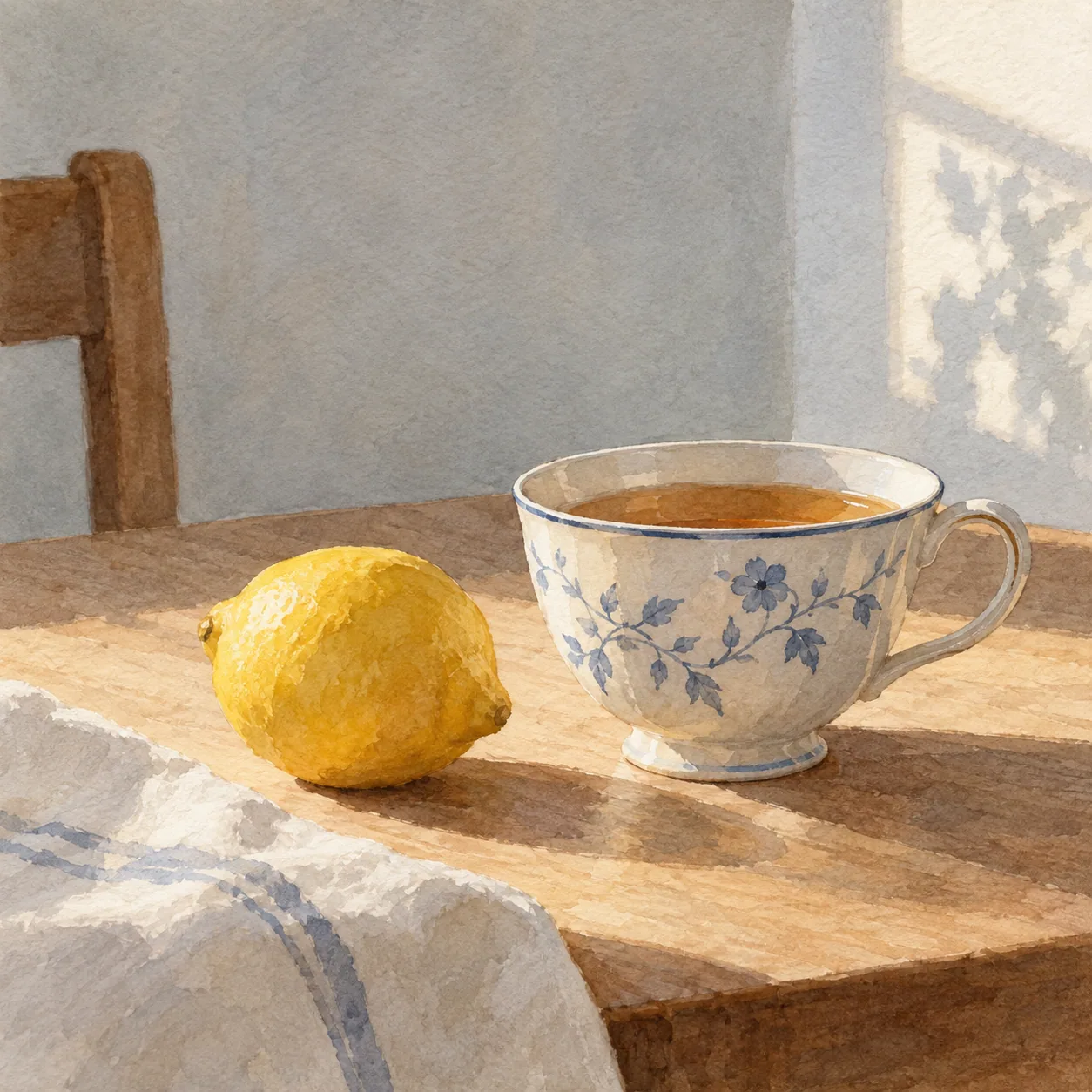 01
A stack of books in one pool of light
Use the edges, page blocks, and cast shadow to make an ordinary still life feel specific. Keep the setup small enough to finish before the light changes.
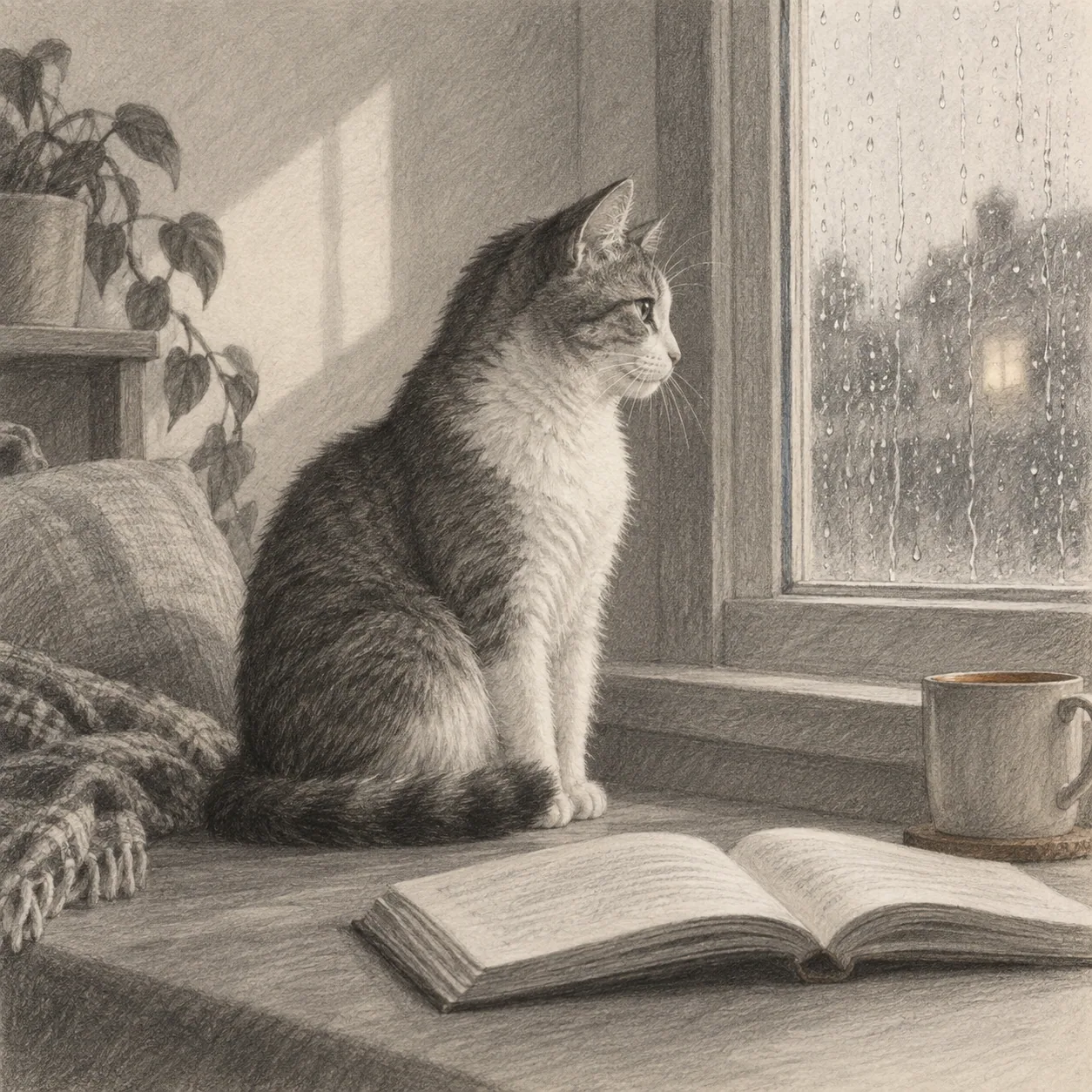 02
A cat framed by a rainy window
Let the cat's silhouette stay quiet while the window reflection creates the main contrast. Crop close and choose one warm detail inside the cool room.
 03
A person waiting with one small object
Give the figure a clear action—holding a map, folding a receipt, or checking a key—then let posture and the surrounding space explain the pause.
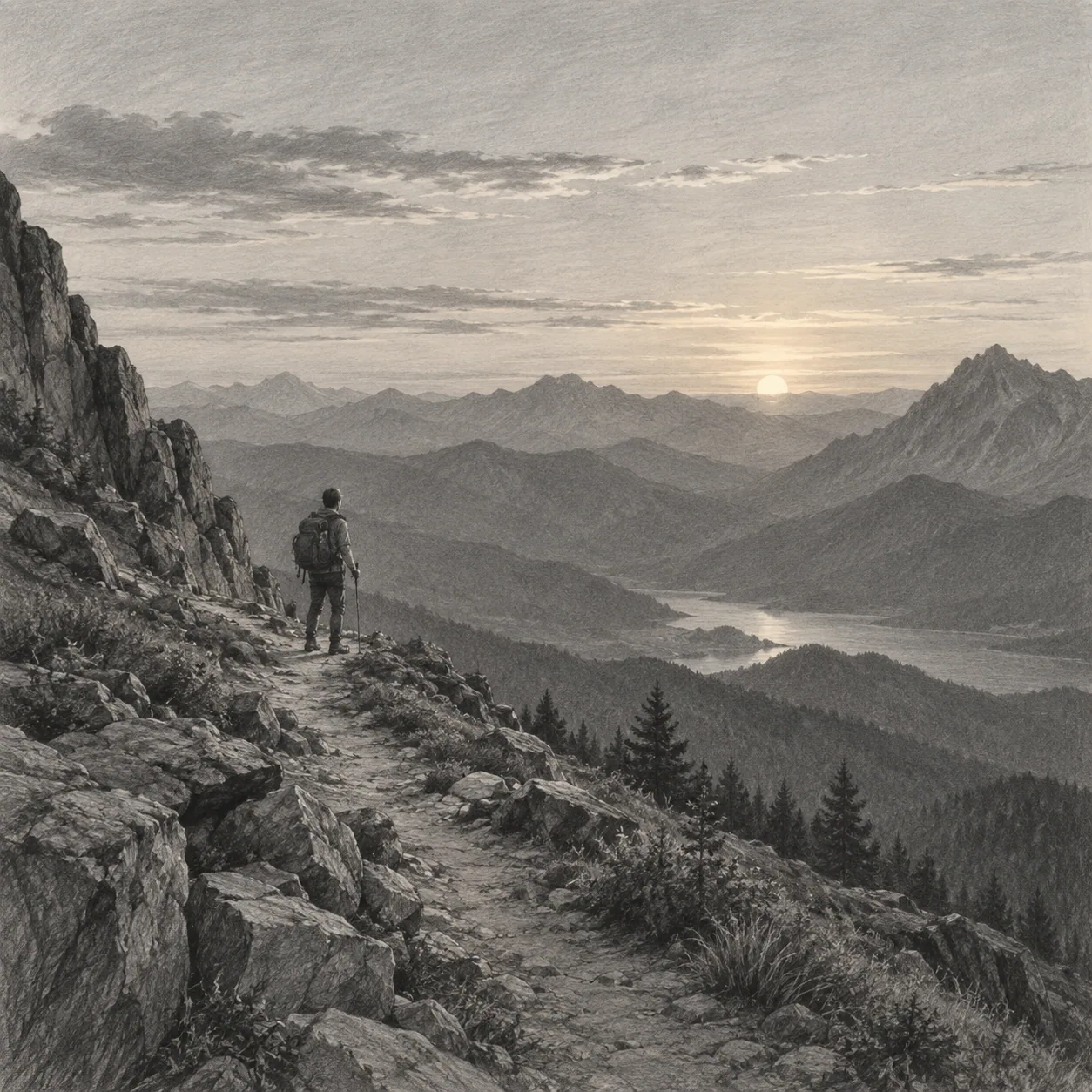 04
A path disappearing into a mountain valley
Block the nearest dark shape first, then place the path through the middle distance. Use one small figure or tree to make the scale readable.
 05
A forest growing through an old room
Keep the room's architecture simple and make the plants obey one rule: they follow the light, climb the walls, or replace one familiar object.
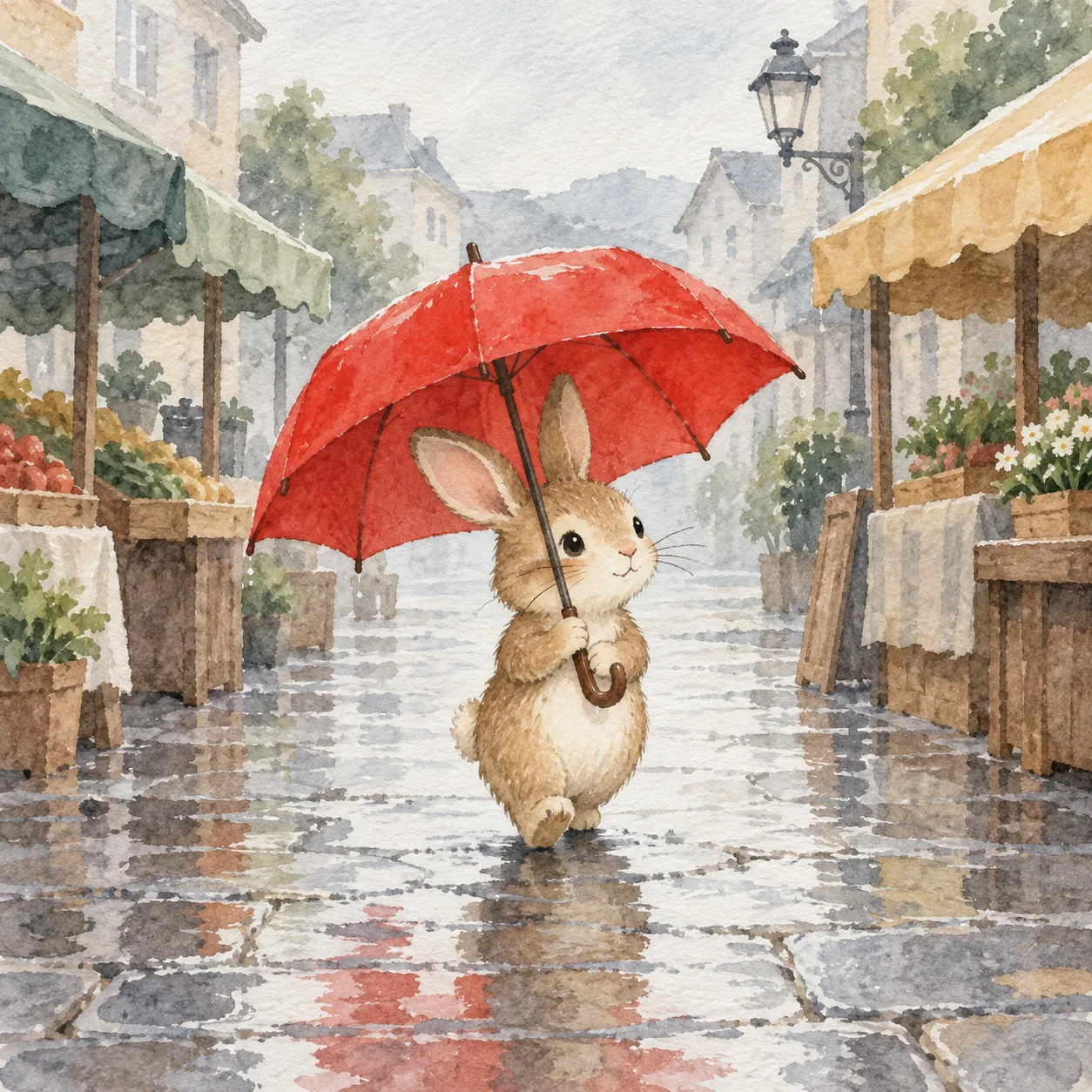 06
A puppy carrying a blanket through a doorway
Use the doorway as a frame and the blanket as a clear shape. A small change in the ears, paws, or shadow can give the scene its expression.
Explore drawing ideas by goal
Choose the path that matches the session you want: a gentle warm-up, a more unusual subject, a repeatable challenge, or one clear idea to draw next.
- Easy drawing ideasWhen you want to draw but your attention is tired, choose a subject with a clear shape and a small finish line. These easy drawing ideas are simple enough to begin quickly and open enough to grow with your skills.
- Cool drawing ideasCool things to draw often start with a familiar subject and change one important thing. Use unusual scale, setting, material, or point of view to make a scene that asks you to look twice.
- Cute drawing ideasCute drawing ideas become easier when you give a small subject a clear shape, a gentle expression, and one detail that makes its world feel lived in.
- Things to drawUse this page as a browsable catalog when you want to scan subjects by session type. If you prefer a shorter guided choice, use What to Draw to filter by time, subject, and difficulty.
- Sketch ideasUse Sketch ideas for a brief warm-up before a longer drawing. Begin with one observable subject, then draw one object from observation, then redraw it from memory.
- Things to sketchUse Things to sketch for a warm-up without searching for reference material. Begin with one familiar object or small place, then choose an object nearby and show it in two different settings.
- Easy things to sketchUse Easy things to sketch for confident practice with approachable subjects. Begin with clear shapes and one shadow, then reduce a familiar object to a few clear shapes before adding a detail.
- Cool things to sketchUse Cool things to sketch for an imaginative composition from a familiar subject. Begin with an unexpected contrast, then pair an everyday subject with one surprising change of scale or setting.
- Drawing topicsUse Drawing topics for a connected sketchbook series or multi-day drawing practice. Begin with a subject that can repeat, then repeat one theme while changing a single rule from study to study.
- Drawing subjectsUse Drawing subjects for focused observational practice. Begin with shape, action, or texture, then study one subject through its outline, structure, and surface.
- 5-minute drawsUse 5-minute draws for short, bounded warm-ups or breaks. Begin with the first readable gesture, then capture the largest gesture, a clear silhouette, and one detail before time runs out.
- Quick drawing ideasUse Quick drawing ideas for a quick start when time or energy is limited. Begin with a fast first mark, then choose a subject, one action, and one simple constraint before the first mark.
- What to drawNeed a direction for the next page? Choose one idea by time, subject, or difficulty, then begin with a clear first move instead of waiting for inspiration.
- Drawing challengesDrawing challenge ideas turn one good subject into a rhythm. Choose a short series, set a repeatable rule, and make each suggestion small enough that you can return to it even on a busy day.
- Suggestion generatorUse this drawing suggestions generator when you want a more specific starting point. Type a subject, setting, or feeling, then turn the result into a warm-up, character idea, composition study, or larger project.
A simple way to choose your next drawing
Start with the kind of session you can actually give yourself today. The best drawing idea is specific enough to begin and flexible enough to make your own.
- 01
Need one idea right now?
Choose by subject, time, or difficulty and get a clear first move for the next page.
- 02
Want a low-pressure warm-up?
Use familiar objects and simple shapes to practice observation without needing a large finished scene.
- 03
Trying to build a drawing habit?
Give yourself a repeatable rule and a small series so each session has a reason to continue.
Choose an idea that fits today
The right drawing idea depends on your time, materials, and attention. A simple object can be enough for a focused study, while a strange combination can restart your curiosity.
Start with what you can finish
A useful idea has a natural stopping point. One object, one figure, or one small scene can fit into a single page. Finishing a small drawing gives you feedback you can carry into the next one.
If the idea feels too broad, add a boundary: draw it from above, use only two values, or work until one song ends. Constraints turn an open question into a decision you can act on.
Match the idea to your mood
Easy drawing ideas are useful when you want a gentle warm-up. Cool drawing ideas can add surprise through unusual scale, setting, or combination. A drawing challenge gives you a repeatable structure when you want to build momentum over several days.
You can move between categories in one session. Begin with a simple object, place it in an imaginative setting, and finish by giving yourself a short time limit. The categories are invitations, not rules.
Add one personal decision
Take any drawing idea and change one ingredient based on your own experience. Use a familiar room, a remembered color, or an object you keep near your desk. That small change can make a generic subject feel specific.
Keep the parts that create energy and remove the parts that distract you. A good drawing is not measured by how faithfully it follows the original idea; it is measured by whether your choices feel intentional.
Choose drawing ideas by available time
Let the length of your session decide the size of the idea. With five minutes, choose a single object, a gesture, or a small patch of light. With twenty minutes, combine two shapes and give them a clear relationship. With an open afternoon, build a scene with a foreground, a middle distance, and one detail that rewards a closer look. Matching the scope to your time makes drawing ideas feel inviting instead of unfinished before you begin.
You can also sort ideas by the kind of attention they require. A quiet still life asks you to compare edges and values. A character scene asks for pose and expression. An imaginative combination asks you to decide how two different worlds share space. Keep a note about which kind of session you enjoyed, then return to that category when you need a dependable starting point. A useful collection grows from your own evidence, not from chasing every possible subject.
Build a collection you will actually use
A long list is only helpful when you can choose from it quickly. Group drawing ideas by the time they need, the material they suit, or the kind of attention they invite. Keep a few five-minute options for busy days, several studies for quiet practice, and a handful of imaginative options for when you want to play. Naming the groups turns a vague archive into a practical menu.
After each session, record what made the idea work or fail. Maybe the subject was too broad, the viewpoint gave you energy, or the constraint made you notice more. Revise the list using those observations. Over time, your collection becomes more personal and more reliable because every new drawing idea is connected to something you have already learned about the way you like to work.
Questions about choosing drawing ideas
Use these answers to choose a useful starting point instead of waiting for a perfect idea.
What should I draw when I have no idea?
Start with the time and attention you have, then choose one visible subject: an everyday object, a person, an animal, or a small scene. If choosing still feels difficult, use the What to Draw page to narrow the options by subject, time, and difficulty.
How do I choose a good drawing idea?
Choose an idea with a clear first move and a natural stopping point. A single object or gesture suits a short session; a scene with foreground, middle distance, and one detail needs more time.
What are good drawing ideas for beginners?
Begin with subjects built from simple shapes, such as a mug, shoe, leaf, book, or plant. These are easy to observe and still teach proportion, overlap, light, and shadow.
How can I make a drawing idea my own?
Change one ingredient you can choose: the viewpoint, lighting, material, setting, or relationship between two subjects. Keeping the other decisions stable makes your version feel personal without losing the original direction.
Should I use a reference when drawing?
A reference is useful when you need to check proportion, structure, lighting, or a pose. Observe it for the information you need, then make your own decisions about the crop, medium, and emphasis.