Four ways to begin
 01
Start with the first readable gesture
Choose one subject and give it a simple frame. The first goal is to make the blank page less abstract.
- What to notice
- a clear first contour
- First move
- draw the largest shape before adding detail
- Try a variation
- try the same subject from a quieter angle
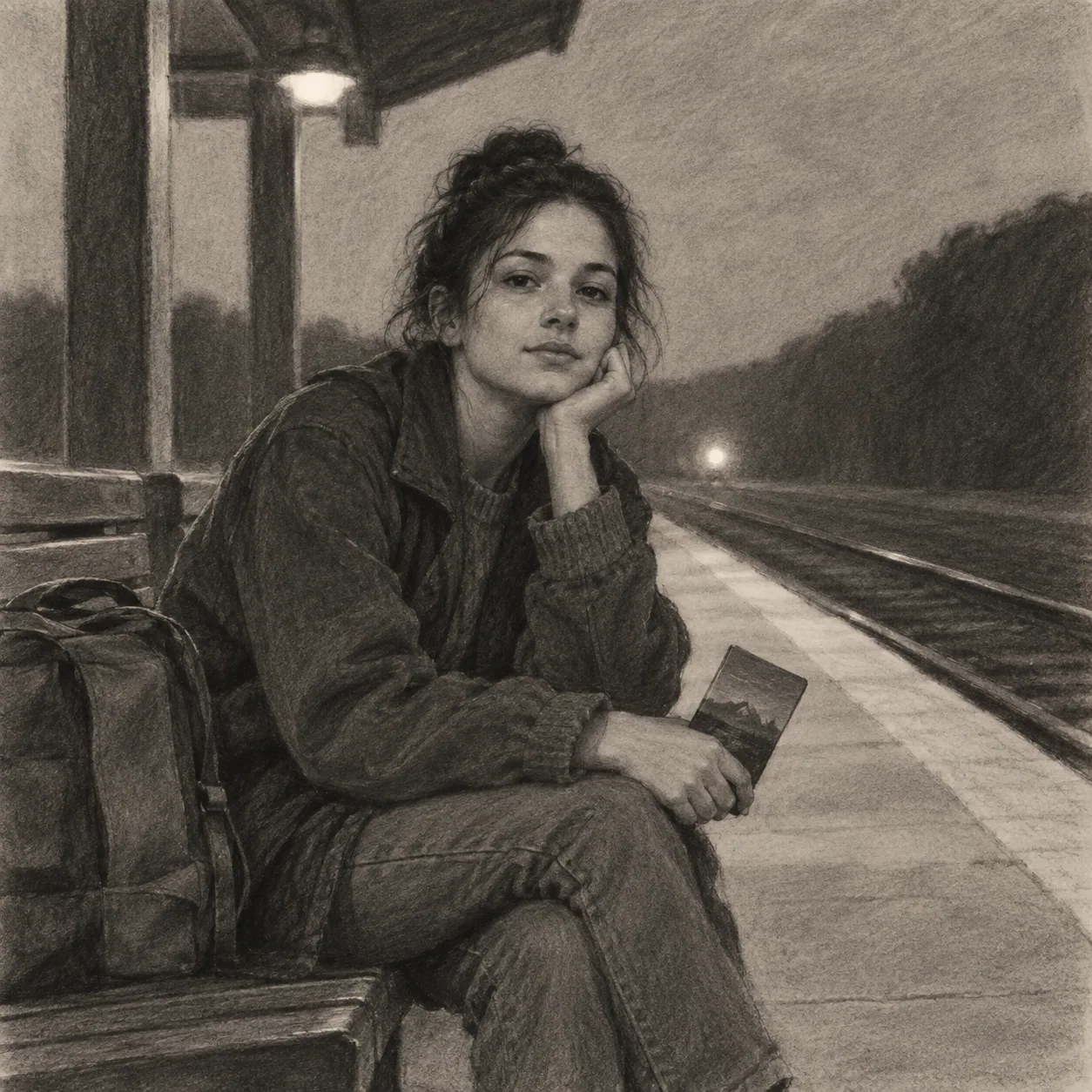 02
Change the viewpoint
Keep the subject familiar but move the angle, scale, or crop so the same idea becomes a new observation.
- What to notice
- comparison and proportion
- First move
- shift the horizon or crop before redrawing
- Try a variation
- make one close version and one wide version
 03
Use a short limit
Set a small timer and stop after the gesture, silhouette, and one useful detail. A finished thumbnail can lead to a longer drawing.
- What to notice
- decisive marks
- First move
- set a five-minute timer and block the silhouette
- Try a variation
- repeat the study with one continuous line
 04
Make a small series
Repeat one theme with three different decisions. The comparison will show you what you actually want to practice.
- What to notice
- a repeatable visual question
- First move
- write one thing to keep constant
- Try a variation
- change only the setting across three sketches
Turn a list into a practice
Use 5-minute draws as a menu, not an assignment. Pick a line, make one observation, and let the next choice come from what the drawing needs.
A browsable list of 5-minute draws
Pick any item below, then change its angle, scale, or setting. The list is deliberately open so it can become your own reference shelf.
Choose one visible thing
A concrete subject gives 5-minute draws a starting edge. Name its shape, action, or setting before worrying about style.
If you cannot decide, choose the item with the clearest first contour.
- 01a three-shape study of the first readable gesture
- 02the same subject seen from above
- 03a close crop with one important texture
- 04a quiet version with generous open space
Give the page a small boundary
A time limit, a thumbnail box, or one pencil can make 5-minute draws feel inviting rather than endless.
Boundaries reduce decision fatigue and leave more attention for looking.
- 05a quick silhouette made in two minutes
- 06a familiar object placed in an unusual setting
- 07a subject drawn only with contour and shadow
- 08a small study focused on the hands or feet
Notice one relationship
Look for a relationship between two shapes, a light and a shadow, or a subject and its surrounding space.
That single relationship can be enough to organize a useful sketch.
- 09a repeated pattern arranged with one change
- 10a scene built from foreground, middle ground, and distance
- 11a turning form with a clear center line
- 12a calm version and an energetic version side by side
Keep the next move obvious
When the drawing pauses, ask whether it needs a new contour, a value, or a change of viewpoint. Avoid adding detail just because the page is quiet.
A clear next move keeps 5-minute draws connected to practice.
- 13a study made with one pencil pressure change
- 14a subject partly hidden by another shape
- 15a thumbnail that leaves the background unfinished
- 16a memory drawing followed by an observation drawing
Save what you learned
Write one short note beside the sketch: what was easy, what shifted, or what you want to repeat.
Over time, those notes turn a list of ideas into a personal map.
- 17a tiny series with three different viewpoints
- 18a texture translated into three simple marks
- 19a drawing anchored by one strong cast shadow
- 20a final variation that combines two earlier choices
The complete collection stays on the page so you can scan it, save a subject, and return when the next blank page arrives.
A focused exercise for 5-minute draws
Give 5-minute draws a clear goal with a focused exercise. Try this: capture the largest gesture, a clear silhouette, and one detail before time runs out. For example, give a sneaker three minutes for its outline and two minutes for its strongest shadow. Begin with the first readable gesture, then make one deliberate choice about angle, scale, or surrounding space. This gives the sketch a specific visual problem and makes the exercise useful for short, bounded warm-ups or breaks. Treat the list as a starting point, not a checklist.
A common difficulty is trying to finish the whole object after the timer has already made you hurry. One useful adjustment is to set a stopping point at the silhouette and use any remaining time for one value change, rather than correcting every mark at once. Compare the result with a second version and note what changed. The comparison shows whether your next study should focus on shape, observation, speed, or invention; it also gives you a concrete reason to return to 5-minute draws.
Build a second version of 5-minute draws
Once the first sketch reads, hold the first gesture and the main silhouette steady and change which contour or value receives the remaining time. This keeps 5-minute draws connected to one visual question instead of making a completely unrelated repeat. One useful next move is to repeat the same object in five minutes, switching from outline to shadow blocks.
Place both versions side by side. Mark what changed in the silhouette, rhythm, or balance, then circle the decision you prefer. If the difference is hard to see, change only one variable at a time. This comparison turns one idea into a short practice sequence and gives you a clear route for the next drawing.