Dog charcoal prompts to try
 01
A dog waiting in a station
Create a charcoal image of a medium-sized dog waiting beside an empty train platform, full-body three-quarter view, deep ground shadows, soft light through morning mist.
 02
A dog shaking off rain
Create a dynamic charcoal study of a wet dog shaking off rain in a narrow alley, strong gesture, blurred background, lifted highlights, high-contrast side light.
 03
A dog carrying a cloth
Create an expressive charcoal image of a dog carrying a folded cloth through a quiet kitchen, low viewpoint, grouped fur texture, warm window light against a dark floor.
 04
A dog on a windy hill
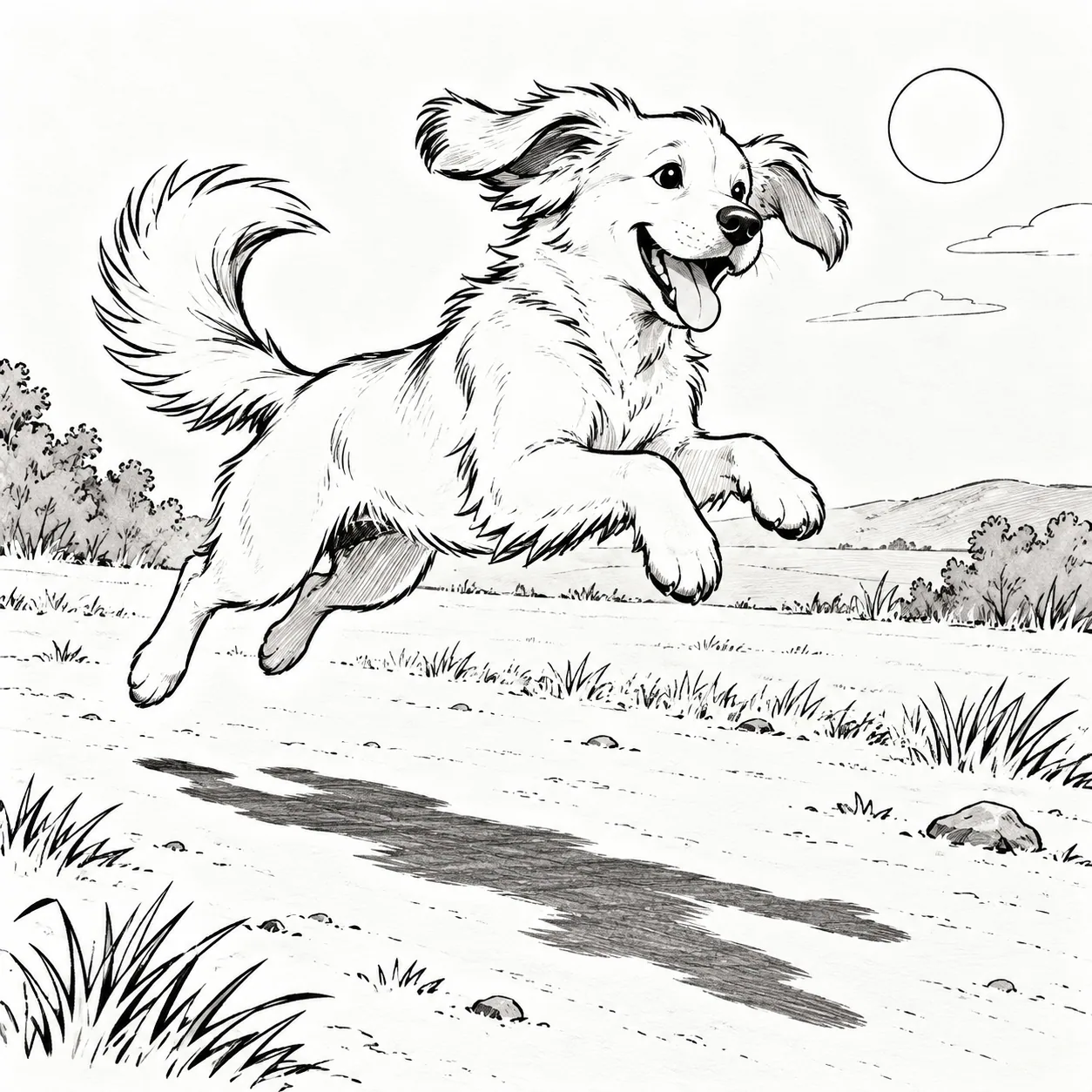
Create a wide charcoal landscape of a dog standing on a windy hill, coat moving with the breeze, broad cloud shadows, clear silhouette, atmospheric paper grain.
 05
A dog beside a kitchen doorway
Create an intimate charcoal image of a dog pausing beside a kitchen doorway, side profile, narrow light across the floor, deep interior shadows, loose expressive marks.
Let gesture lead the charcoal study
Intermediate dog prompts can carry more movement and atmosphere, but the pose still needs a strong visual path so the model knows where the action begins and ends.
Choose an action with a visible line
A dog running, turning its head, or waiting at a doorway gives the prompt a useful gesture. Describe the weight shift and the direction of the body instead of relying only on an adjective such as energetic. Visible movement gives the image a stronger structure.
Add one environmental element that reacts to the action: wet ground under the paws, a coat moving in the wind, or dust lifting behind a step. The reaction connects the dog to the scene and keeps the prompt from becoming a floating character portrait.
Use charcoal to organize value
Charcoal direction works best when it names the marks and the value pattern together. Try broad smoky shadows, compressed blacks around the focal point, eraser-lifted highlights, and visible paper grain. These instructions create a surface while keeping the light legible.
Avoid asking for every fur strand. State where the darkest mass belongs and which edges should soften into the background. A model can then suggest fur through grouped texture rather than treating the subject as a field of unrelated lines.
Anchor the frame before adding detail
Place framing and point of view before the longer style description. A low three-quarter view can make a standing dog feel alert, while a wide view can emphasize its relationship to a street, field, or empty station. The camera decision controls the scale of everything else.
Use Text to Prompt to compare one controlled edit at a time. Keep the dog and the action stable while you change the crop, light direction, or background value. Intermediate workflows benefit from a visible reason for each revision.
Change the atmosphere without changing the dog
Hold the breed or body shape steady while testing a storm-lit park, a quiet kitchen, or a train platform at dawn. The stable subject makes it easier to see what the charcoal treatment and environmental light are doing in each version.
If the output loses the gesture, simplify the setting and return to the main action. If it feels too flat, change the value relationship between the dog and the background before adding more adjectives about texture.